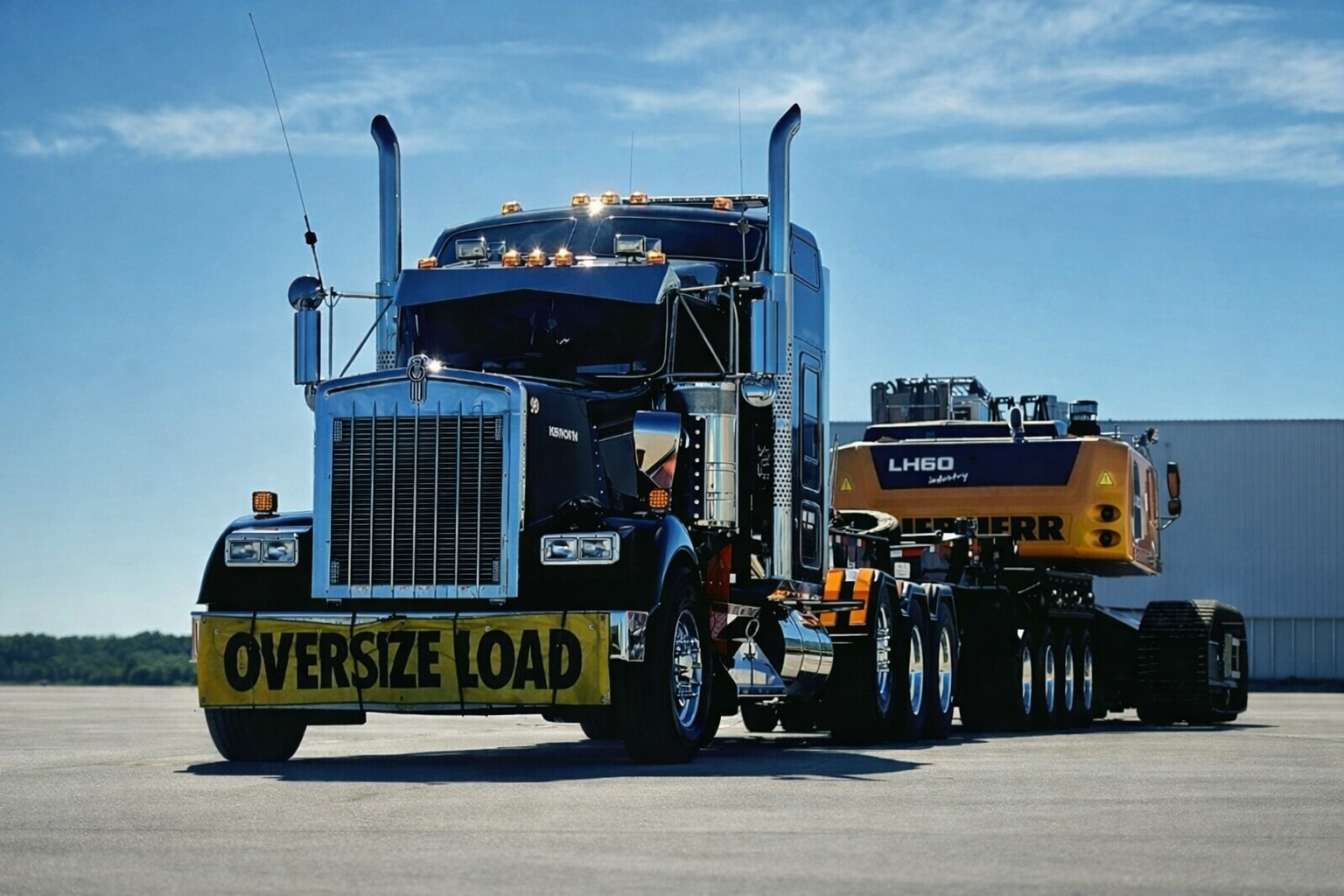
When your project relies on equipment that defies standard legal dimensions, traditional logistics simply won’t cut it. Moving a 100-ton excavator, an industrial wind turbine blade, or a massive transformer requires a highly calculated approach. If your business depends on getting oversized assets to a job site safely, mastering the world of heavy haul transportation services is the key to preventing costly project bottlenecks.
Here is a look at what goes into a successful heavy equipment shipping operation and how to choose the right partner for your heaviest loads.
What Defines Heavy Haul Transportation?
In logistics, standard freight fits neatly into a standard dry van or flatbed trailer. Heavy haul cargo, however, breaks the rules. If a load exceeds standard legal limits—typically 80,000 pounds gross weight, 8.5 feet in width, 13.5 feet in height, or 48 to 53 feet in length—it requires specialized attention.
Professional heavy haul transportation services utilize a fleet of complex, multi-axle trailers designed to handle immense stress. Trailers like Removable Goosenecks (RGNs), drop decks, and steerable dollies allow logistics teams to drop the cargo’s center of gravity and distribute extreme weight evenly across dozens of tires, protecting both the load and the asphalt underneath.
Key Steps in the Heavy Equipment Shipping Process
Executing a heavy move is less like standard shipping and more like civil engineering. A successful haul relies on three fundamental phases:
- Surveys and Route Planning: Heavy haulers don’t just look at GPS. They map out routes to avoid low-clearance bridges, weight-restricted overpasses, tight urban turns, and active construction zones that could trap a massive rig.
- Permitting and Legal Compliance: Every state and municipality has strict, differing laws regarding oversized loads. Securing superload permits, arranging police escorts, and scheduling civilian pilot cars (escort vehicles) are mandatory steps before the wheels ever turn.
- Advanced Load Securement: The kinetic energy of a moving piece of heavy machinery is staggering. Tie-down points, heavy-duty chains, and outrigger brackets must be meticulously calculated to ensure the cargo remains completely immobilized through every bump and turn.
Why DIY Logistics is a Costly Risk
It can be tempting to try and manage heavy shipping internally or hire a cut-rate broker to save a few dollars. However, the risks of a logistical failure are catastrophic.
A single missed permit can lead to thousands of dollars in fines and immediate impoundment. Worse, improper securement or poor route planning can lead to infrastructure damage or severe highway accidents. Partnering with a dedicated heavy haul expert ensures you are covered by massive cargo liability insurance and backed by drivers who specialize exclusively in oversized maneuvers.
Choosing the Right Heavy Haul Partner
Your equipment is the lifeblood of your operations. When vetting providers for heavy equipment shipping, look for a team that owns its specialized fleet, exhibits deep knowledge of regional permitting laws, and offers clear, transparent tracking throughout the transit.
By prioritizing expertise over the lowest bid, you protect your multi-million dollar machinery and ensure your job site stays perfectly on schedule.